Chaddanta Jātaka
Chaddanta Jātaka
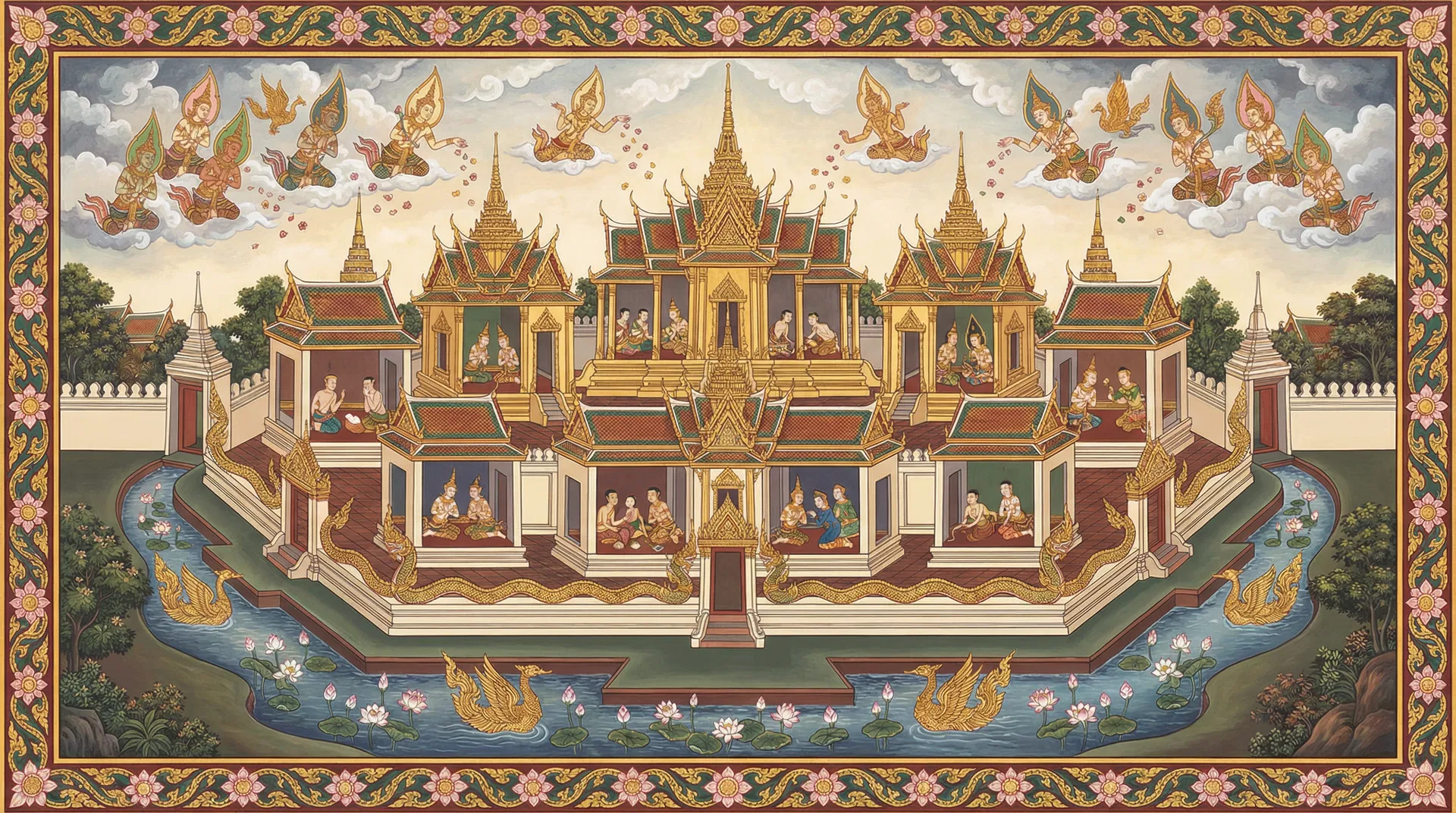
Deep within the mystical Himalayas, where snow-capped peaks kissed the azure sky and ancient forests whispered secrets to the wind, resided a magnificent six-tusked elephant named Chaddanta. He was no ordinary creature; he was a Bodhisatta in a past life, embodying purity, strength, and profound wisdom. His skin shimmered like polished jade, and his six tusks, each as white as a lotus blossom, radiated a gentle luminescence.
Chaddanta lived with his two devoted queens, Mahili and Chullayogini. Mahili, his elder queen, was deeply devoted and cherished their peaceful existence. Chullayogini, however, harbored a secret envy. She longed for the affection that Chaddanta showered upon Mahili, and a seed of resentment began to sprout in her heart.
One day, driven by jealousy, Chullayogini sought out the king of the gods, Sakka. Appearing before him in disguise, she lamented, "Oh, great Sakka, my heart is heavy with sorrow. My beloved husband, the noble Chaddanta, neglects me. He showers all his affection on Mahili, ignoring my existence. If I cannot have his love, I wish only to die."
Sakka, ever a guardian of virtue but also a tester of hearts, was moved by her seemingly genuine distress. He devised a plan to test Chaddanta's virtue. Sakka descended to the earth, disguised as a hunter, and approached Chaddanta while he was peacefully bathing in a lotus pond.
"Noble elephant!" the hunter called out, his voice feigning surprise. "Your tusks are indeed magnificent! They are the most beautiful I have ever seen. They would make a splendid throne for the king of the gods himself!"
Chaddanta, ever gracious, bowed his head. "It is an honor to hear such praise, hunter. My tusks are yours to take, if they can serve such a noble purpose." He extended his trunk, ready to offer them.
The hunter, revealing himself as Sakka, was taken aback by the elephant's boundless generosity. "Chaddanta, your virtue is unparalleled. I do not wish to harm you. But your queen, Chullayogini, has expressed a deep sorrow due to your perceived neglect. I offer you a boon: your tusks shall be plucked out and presented to her, adorned with flowers, so that her heart may be softened and her envy appeased."
Chaddanta, though pained by the thought of losing his magnificent tusks, agreed. He understood that his queen's unhappiness was a burden he wished to alleviate. Sakka then used his divine power to gently uproot the six tusks, leaving the elephant’s wounds miraculously healed without a drop of blood. The tusks, shimmering with celestial light, were then presented to Chullayogini, adorned with fragrant blossoms.
When Chullayogini saw the tusks, her heart was filled not with joy, but with a pang of guilt and a deeper realization of her own wickedness. She had caused suffering to the noble Chaddanta out of her petty jealousy. The sight of the tusks, a testament to his selfless love and sacrifice, overwhelmed her. In her shame and remorse, she fell into a deep swoon, and when she awoke, she vowed to live a life of penance and mend her ways.
Chaddanta, though physically diminished, remained serene. He had acted with unwavering compassion, prioritizing his queen's perceived happiness over his own physical adornment. He returned to his forest dwelling, continuing his life of virtue and meditation, his spirit unbroken. The tale of the six-tusked elephant became a legend, spoken of in hushed tones by sages and hermits, a testament to the extraordinary compassion and selflessness of the Bodhisatta.
Later, in another life, Chullayogini was born as a princess who fell ill and craved the flesh of a six-tusked elephant, believing it to be a cure. King Piliya, her father, sent hunters to the forest. Chaddanta, recognizing the princess's dire need and understanding the karmic repercussions, willingly offered himself to the hunters, allowing them to kill him and take his flesh, thus fulfilling his compassion once more.
— In-Article Ad —
💡Moral of the Story
True compassion and selflessness involve sacrificing even one's most cherished possessions or physical attributes for the well-being of others, especially those who have wronged us. Jealousy and envy lead to suffering and regret.
Perfection: Khanti Paramī (Perfection of Patience and Forbearance), Mettā Paramī (Perfection of Loving-kindness)
— Ad Space (728x90) —
More Jataka Tales You May Enjoy
 253Tikanipāta
Kusa-Jātaka
Kusa-JātakaIn the kingdom of Kampilla, nestled beside the sacred River Ganges, lived a king named Ud...
💡 Jealousy and hasty judgments can lead to terrible suffering and separation. True love is tested by adversity, and forgiveness is essential for healing and reconciliation. Patience, inner strength, and understanding are virtues that can overcome even the most profound injustices.
 442Dasakanipāta
Sutasoma Jataka
Sutasoma JatakaIn the bustling city of Benares, lived a king named Sutasoma, a ruler whose heart was...
💡 True victory is not achieved through violence, but through understanding, compassion, and the transformation of negativity.
 188Dukanipāta
Kacchapa Jataka
The Tale of the Steadfast TortoiseIn the heart of a vast, sun-drenched jungle, where ancient trees r...
💡 Steadfastness, patience, and unwavering determination are virtues that can overcome immense challenges and lead to salvation.
183DukanipātaMuḷapariyāya Jātaka
The Tale of the Root of All EvilIn the ancient and prosperous city of Varanasi, ruled a king named B...
💡 The root of all suffering and evil lies within the human mind, stemming from craving, attachment, and ignorance. True peace is found by understanding and overcoming these internal afflictions.
179DukanipātaMahāpuṇṇa Jātaka
Mahāpuṇṇa JātakaIn the heart of the kingdom of Kasi, a land blessed with fertile soil and a prospero...
💡 By consciously pausing and reflecting when anger arises, one can gain control over impulsive reactions, leading to wiser decisions, improved relationships, and inner peace. Cultivating patience and understanding is a path to great merit.
 85Ekanipāta
Vessantara Jātaka
Vessantara Jātaka In the magnificent kingdom of SiBī, ruled the noble King Sanjaya and his virtuous ...
💡 True generosity comes from the heart and requires immense courage and sacrifice. The practice of giving, even when it leads to personal suffering, leads to profound spiritual merit and liberation.
— Multiplex Ad —